Substance Use Prevention - Hidden In Plain Sight
Written by: Bethany Brzozowske, MPH, CHES - SUBH Program Manager & Lance A. Pyle - Curry County Manager
The views and opinions expressed in this article are those of the authors and do not necessarily reflect the official policy or position of the Substance Abuse & Mental Health Services Administration (SAMHSA). Any content, materials, or recommendations shared are solely the responsibility of the authors.
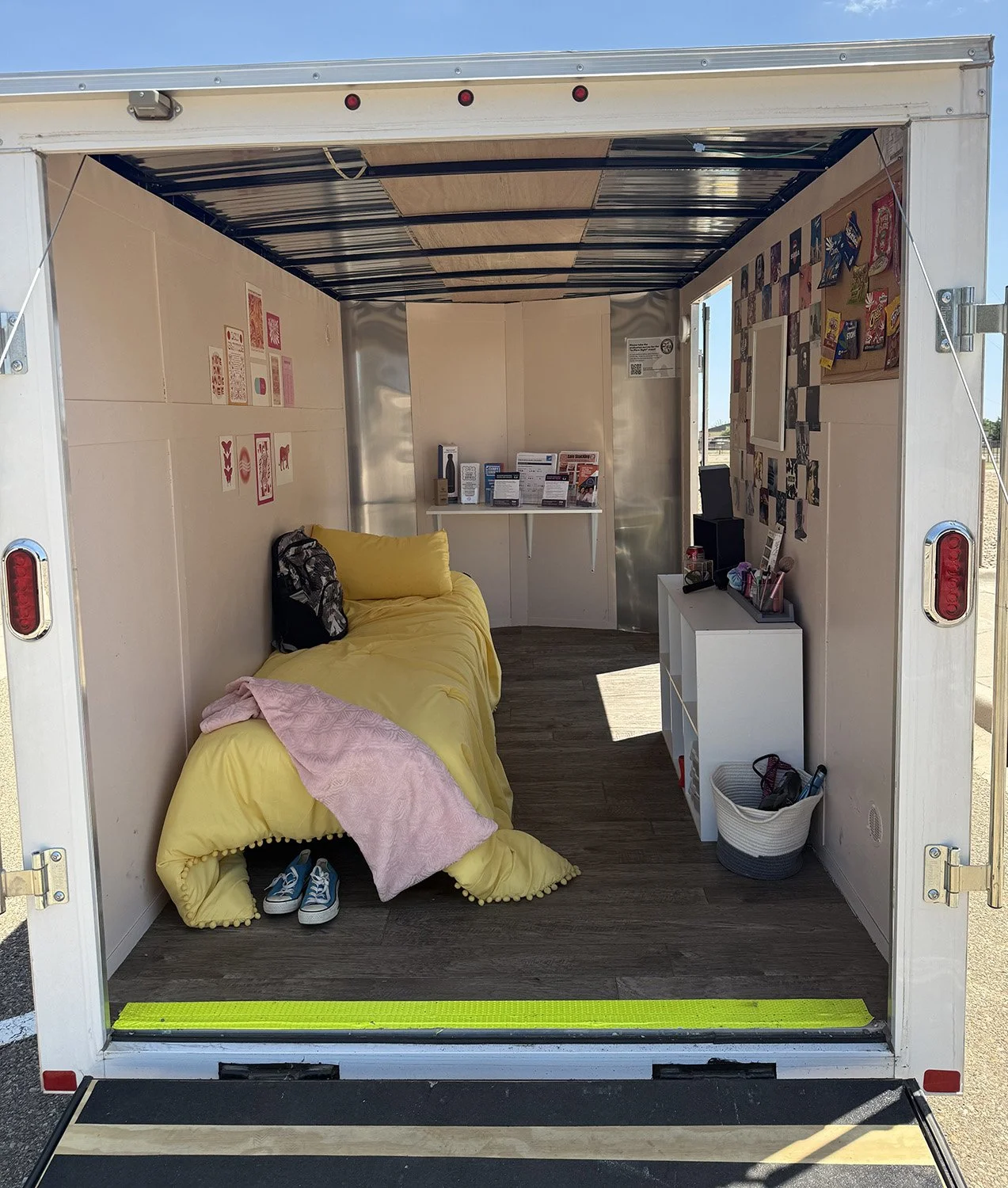
Our Hidden In Plain Sight (HIPS) trailer is a mobile, interactive experience that simulates a teenager's bedroom to provide the opportunity to identify common hiding places of drug-related items, or items that can indicate risky behavior.
The Substance Use & Behavioral Health (SUBH) Program aims to prevent the onset and reduce the progression of marijuana use, opioid use, and mental health issues among youth and young adults. We address retail access, social access, social norms, and improving community capacity through evidence-based education and environmental strategies. Manager Lance Pyle highlights the County’s dynamic grants team who’s proactive and creative approaches in sharing information, community engagement, and youth opportunities demonstrate a concerted and intentional effort towards reducing substance use in Curry County, New Mexico. The Hidden In Plain Sight model was shared with our team by community members wanting to explore ways to showcase how everyday items can be used to conceal substances and alcohol.
Our Hidden In Plain Sight (HIPS) trailer is a mobile, interactive experience that simulates a teenager's bedroom to provide parents, guardians, and educators the opportunity to identify common hiding places of drug-related items, or items that can indicate risky behavior that are often hiding in plain sight. The hidden items include marijuana dab pens, vapes, and we simulate opioids with white tic tacs.
Once participants arrive, they receive a quick explanation of what the HIPS trailer is and its purpose. They will explore the simulated bedroom and try to find the various concealed items, and when they are done, any remaining hiding places are revealed. This experience does not require dedicated time or presentation; it is optimally used as a come-and-go experience, so it is very flexible to the context of the engagement. Let’s dive into the HIPS trailer - how it came to be, lessons learned, and how you can bring a similar experience to your community.
How was the HIPS trailer funded?
Our HIPS trailer was funded through the SUBH Program. This community program is a grant recipient of the Strategic Prevention Framework—Partnerships For Success (SPF—PFS) Grant Program through the Substance Abuse and Mental Health Services Administration (SAMHSA). Grant funds purchased the trailer and related supplies and equipment to outfit the simulated teenager’s bedroom. Some of the smaller, everyday items that we used to outfit the trailer were donated by program staff (a pair of shoes, a jacket, etc.). The hidden items, detailed earlier in this article, were not purchased with grant or county funds. Schools in the county confiscated these items and donated them to our program for educational purposes.
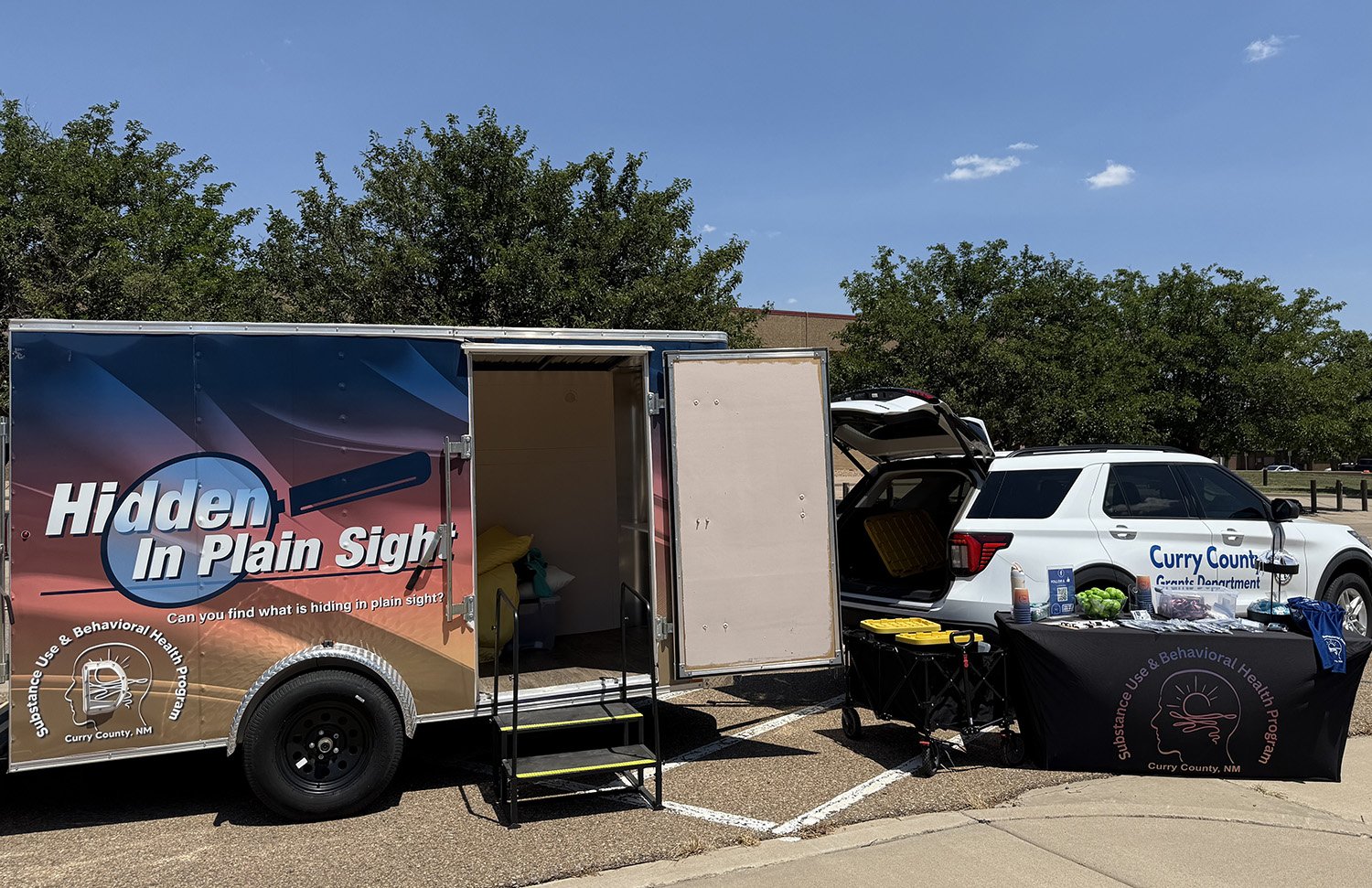
The HIPS trailer goes to events where adults 21 and over are present.
Where do we take the HIPS trailer?
The HIPS trailer is best designed for events that only have adults present. To engage educators, we bring the trailer to professional development days and in-service days. To engage parents and caregivers, we bring the trailer to parent-teacher conference days. We have also considered bringing the HIPS trailer to businesses and community partners for lunch-and-learn opportunities. This experience is not meant for viewers under the age of 21; this is why we do not bring the HIPS trailer to community events that attract families (no open houses, no festivals, no block parties). This has empowered the grants team to continually think creatively and expand on strategies to inform our residents and reduce substance use. As time goes on, youth will learn more from the media and their peers, so we must be diligent to update our trailer and bring additional awareness strategies to curve the challenge in our county.
How do we overcome the common assumption of ‘not my kid’ or ‘not my community’?
As participants explore the trailer, they are most often surprised by what they find, and to help further frame the trailer's purpose, we always include call-outs as participants are moving through the trailer. These callouts include, but are not limited to, ‘All the hiding places you are discovering have been sourced from Amazon and are under $25’; and ‘All of the hidden items you are finding were confiscated by a school in Curry County’. Both of these call-outs and others are incredibly helpful in guiding the participants in processing the surprise of what they are seeing and connecting those feelings to their own family and community.
If someone has seen the trailer once, how do we keep it interesting?
The hiding places of items constantly change, much like a teenager’s bedroom. Every time we use the trailer, we rearrange the decor and hidden items to inspire fresh perspectives and to ensure our presentation isn’t static. Currently, we are building a teenage boy’s room that will host different decor and hidden items associated with that demographic, bolstering the education we strive to deliver. Considering the number of events we attend, we are always looking for new ways to cultivate our design and bring the most modern and relatable presentation to all interested parties in an effort to demonstrate the ever-present fact that substance use does exist amongst teens.
How do we evaluate the impact of the HIPS trailer?
Through our contracted evaluator, we generated a pre/post survey that participants take to demonstrate knowledge differences before the event the (‘pre’ survey) and after the event (the ‘post’ survey) of modern-day hiding place teens may use, the signs of substance use related behaviors, where to access substance use prevention information and support, as well as other program-relevant information. Once participants have completed the HIPS experience, they scan the displayed QR code to take the survey. From this brief survey, we have observed a consistent increase in knowledge across all the topics asked. The Curry County adaptation of the HIPS model has received favorable formal quantitative and informal qualitative feedback. Curry County Manager Lance Pyle states, “As the County Manager, but also as a parent of a 5th and 7th grader, I was surprised when I walked through the trailer and was only able to locate about half of the items. It makes you more aware, and we have heard similar responses from business leaders, educators, and parents. Our goal is to continue to share this resource with our community, other counties in New Mexico, and across the United States. This is not just an issue unique to one county, but all of us. By sharing and working together we can make difference.”
How to follow up and address concerns about substance misuse?
At every HIPS trailer engagement, we have a resource table. Since the trailer aligns with the purpose and activities of the SUBH Program, its initiatives such as safe-storage, safe-snacking, and safe-disposal, and their importance is highlighted through this experience. We provide program information, 988 information, talk toolkits of how to prepare for an informed and non-judgmental discussion with your child in regards to substances, and much more.
What if I don’t want a trailer, how can I bring this educational experience to my community?
No trailer? No problem. A government-owned or leased room in a high-traffic area (i.e. a library, county office, or mall) can be temporarily or indefinitely repurposed as a brick-and-mortar HIPS experience. Another option is a pack-in-pack-out HIPS experience. For example, we have two backpacks that have hiding places and hidden items that we rotate. These backpacks can be helpful for professional tabling events and health fairs since they are mobile and space conscious.
In closing, Curry County Manager Lance Pyle shares “It is the unfortunate reality that substance use and misuse affects every community. However, this means that no one county or community is alone in finding solutions, so we have a shared responsibility to creatively and responsibly address this persistent challenge. Through consistent and informed awareness strategies, educational tools, and prevention frameworks we can continue to collectively support our community partners and neighbors alike to overcome substance use and create a healthier future for generations to come.” To learn more about the Curry County adaptation of the Hidden In Plain Sight model, contact the SUBH Program Manager, Bethany Brzozowske at subhprogram@currycountynm.gov or 575-763-7725. To view all Curry County’s Substance Abuse Programs, visit currycountynm.gov/services/substance-use-behavioral-health-program.